Your Page Title

"Rural America is investable": National commission tours Delta to see what works for rural America

Email share
Comments
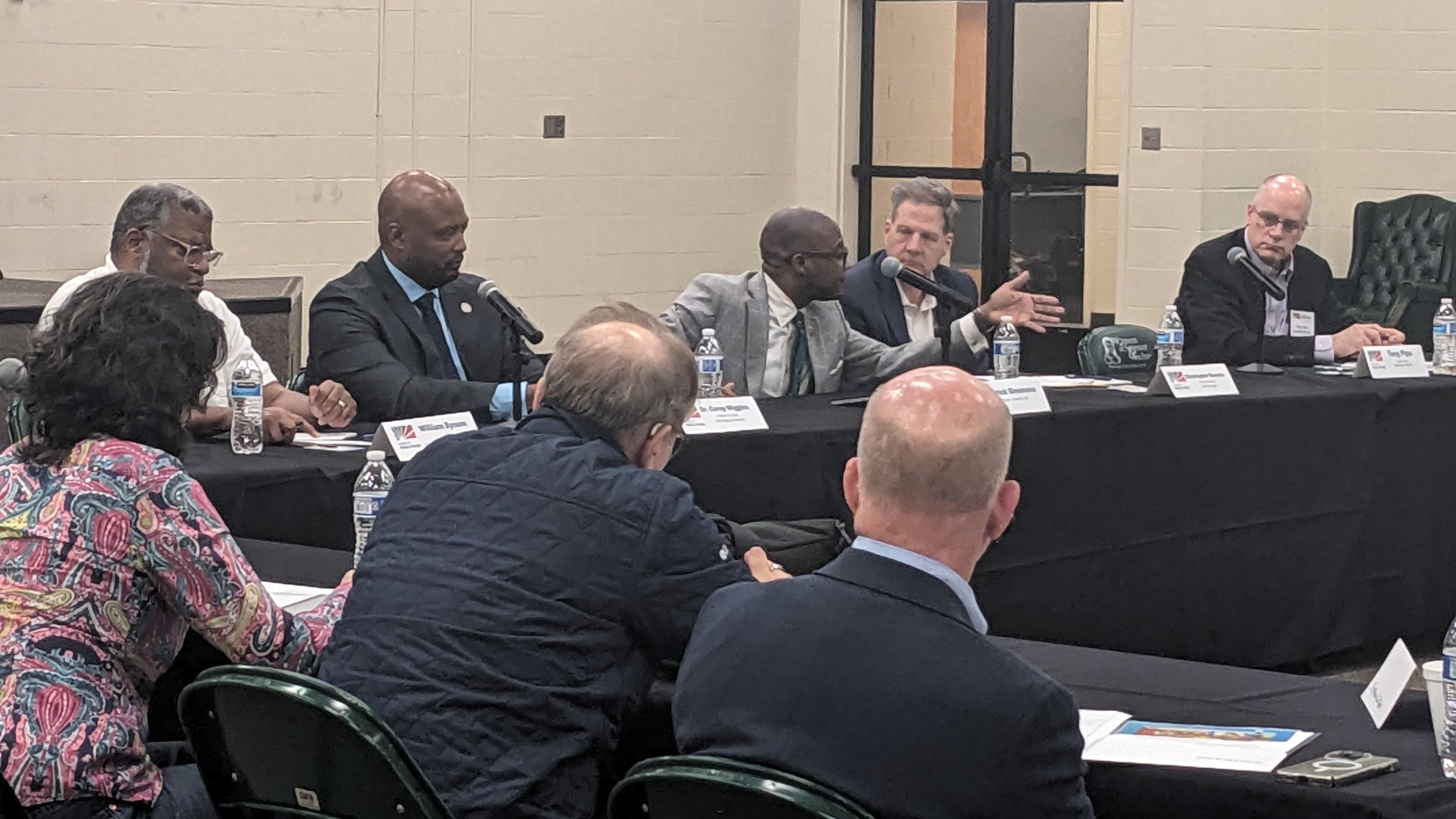
Greenville mayor Errick Simmons addresses commission members during a panel discussion at Mississippi Valley State University. 
Elise Catrion Gregg, MPB News

As part of a nationwide project to develop policies for rural prosperity, a commission with the Brookings Institute and American Enterprise Institute stopped in the Delta this week to hear from the community on what rural America needs to thrive. 

Elise Catrion Gregg

"Rural America is investable": National commission tours Delta to see what works for rural America

00:0000:00

Commissioners, who include former politicians as well as business and nonprofit leaders, are traveling across the U.S. to speak with folks in rural areas.

The Mississippi Delta was the second stop in a series of field hearings: their first was back in October in North Dakota and Minnesota. 

"In rural America, one size does not fit all," said commission co-chair and former U.S. Senator Heidi Heitkamp of North Dakota. 

What she sees as needed across the country — especially in the Delta — is empowering locals.

"The most significant asset rural America has is its people," Heitkamp told MPB. "When you lose people, you lose opportunity for rural America: so how do we keep more people believing in our communities and helping to grow our communities?"

At Wednesday's Itta Benna panel, community members said that what keeps people in rural communities are opportunities and resources. 

Job opportunities and investment in young people were particularly important for folks at the panel. Over half of Mississippi's population lives in a rural area. 

"Down here in the rural area it's kind of hard: if you don't graduate and go into your field immediately, it's kind of hard to get a job," said Maurice Collins, a Greenwood native and rural public policy graduate student at Mississippi Valley State University. 

MVSU grad student Jasmine Murphy, who's also studying rural public policy, spoke to wide range of areas that need those investments in the Delta. 

"It's a lot of trouble with funding for our clinics and our hospitals here in this area," she said. "We're having trouble with funding of our schools, from elementary to high school — to even my very university that I'm attending right now."

Filer image
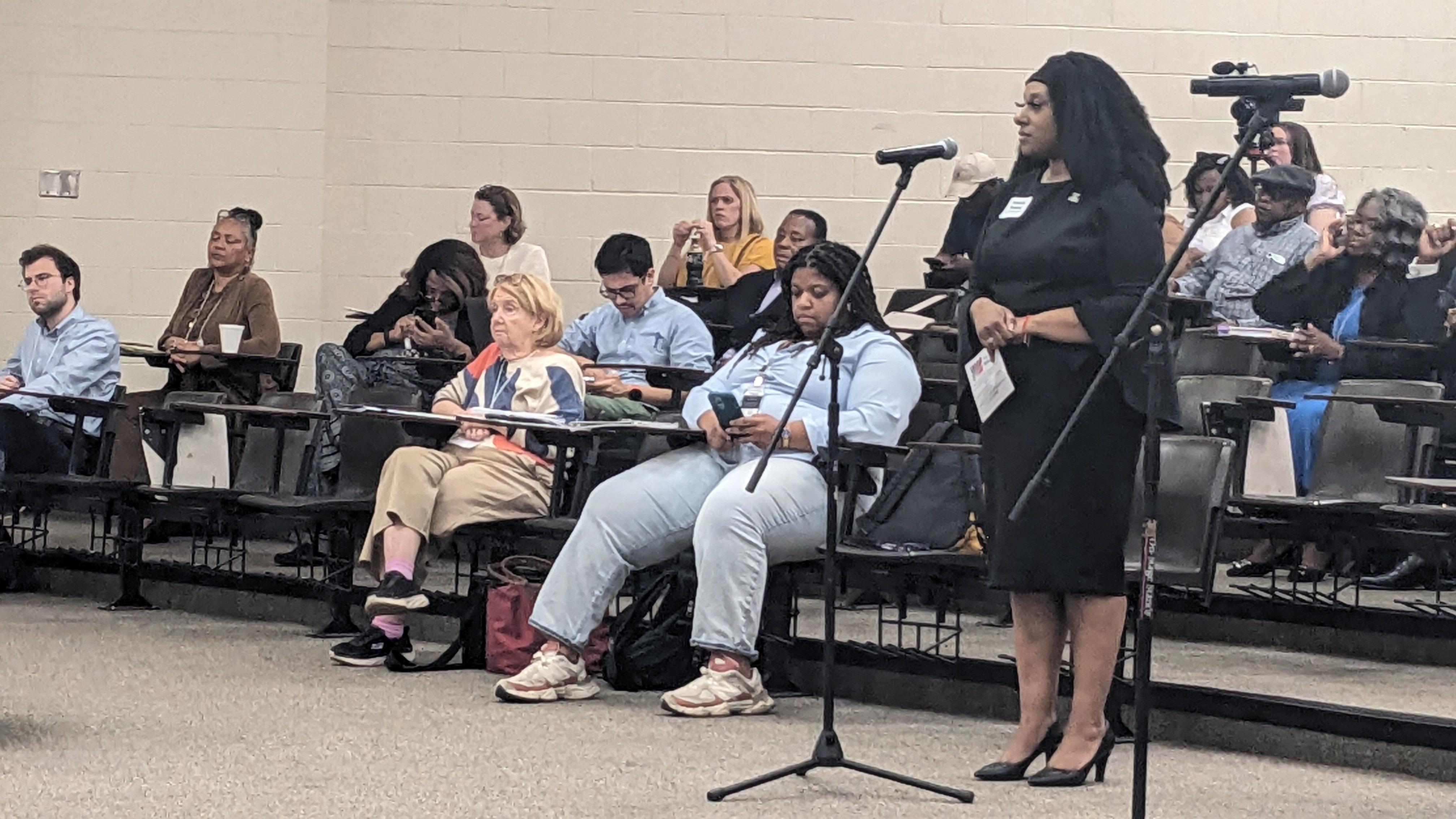
Jasmine Murphy waits at the microphone to address the commission on what she thinks the Delta needs to thrive.
Elise Catrion Gregg, MPB News

That means getting the resources they need while also being allowed to guide policy. 

"We want to be handed the pen, so that we are able to get to the state of making legislative proposals and policies that reflect how we feel as everyday citizens that are living here," Murphy said.

During a panel discussion, local leaders from the state and region also highlighted the balance between working with local people to bring in what's needed at the federal level. 

"When we talk about rural prosperity in America, we must begin with this simple truth: the Mississippi Delta is not lacking in talent, it's not lacking culture," said Greenville mayor Errick Simmons. "And it's most definitely not lacking in work ethic."

"What it has experienced, commission, for generations, is disinvestment."

Simmons talked about recent investments from private companies like Amazon and Entergy in Mississippi and how Greenville has worked to secure investment.

"But you cannot recruit business without reliable water systems, you cannot expand industry without transportation corridors," said Simmons. "And you cannot compete globally without broadband connectivity."

And he added that it's not just about what resources are made available to rural communities, but the process for getting them, too. 

"When we talk about bridging the gap with lack of access and opportunity, we've got to make sure that we simplify federal grant processes," he said. 

Retired teacher Cassandra Baxter Hansbrough said that's a critical resource in and of itself for the Delta. 

"We need education, we need consultants...to help us improve as an area in the areas of research, grant writing, and planning," she said. 

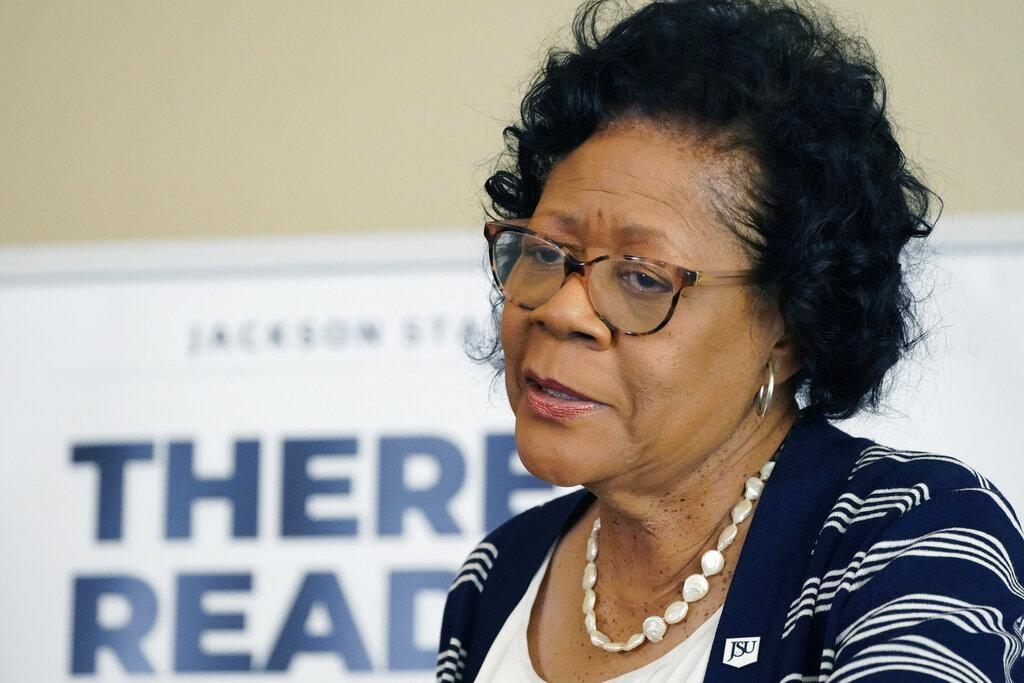
Filer image
Cassandra Baxter Hansbrough, a retired Leflore County teacher, says that access to needed resources and guidance on getting them is key for rural America. 
Elise Catrion Gregg, MPB News

Bill Bynum, CEO of Hope Credit Union, said much of what makes rural communities successful is getting access to those resources as well as being able to pass them on. 

"That wealth stabilizes families, communities, it can be passed on to next generations and I think that's no different for the Delta, for the Black Belt, for Deep South," he told MPB. "But what is different is how accessible those tools are."

And, in the Delta, there are unique challenges for anyone looking at how to develop communities. 

"Those challenges, while not limited to people of color, they are disproportionately weighing on Black folks here," Bynum said. "You can go to Appalachia, you can to Minnesota, you go to North Dakota, but the racial dynamics are very different here in the Deep South." 

"I think it's important for the Commission to see the entirety of rural America, and that's what they're committed to doing."

And, when rural America succeeds, Bynum said, everyone gets a leg up. 

"One gentleman talked about how central rural communities are to innovation in this country," he said. "You think about the adage that necessity is the mother of invention: well, there's a lot of necessity in rural areas."

"You can see how that has sparked innovation and creativity and produced some solutions that aren't just applicable in rural communities but that can be applied anywhere and that are scalable."

Ultimately, success means letting locals take the lead, said commission member Janti Soeripto, president and CEO of Save the Children.

"Rural America is investable, but you have to treat it as such," she said. "I do think it means a lot less bureaucracy." 

"More risk-taking: yes, accountability and measurement, but more risk-taking and an acceptance of that risk, because that is what every investor does, and also more flexibility for local leaders."