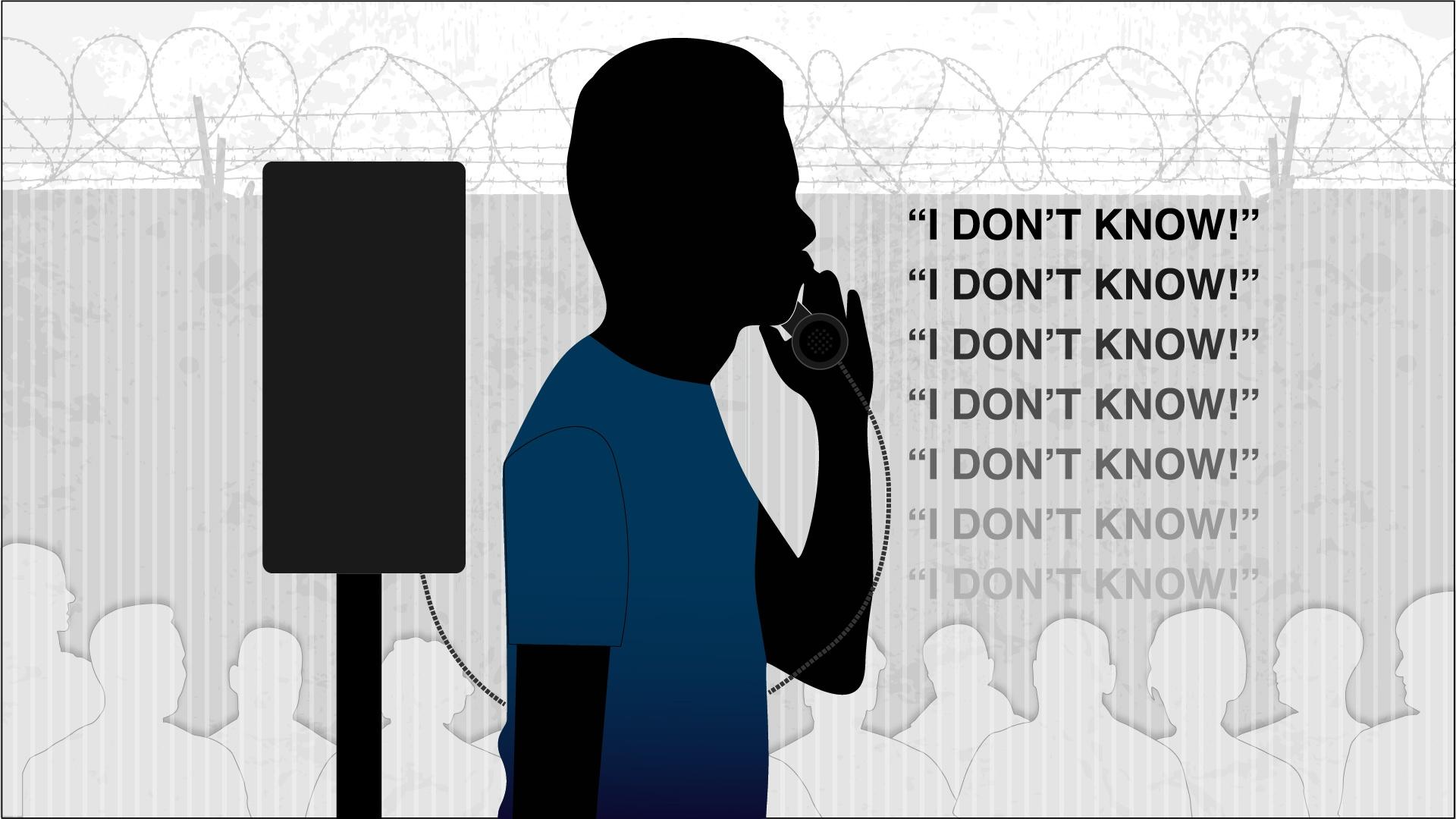
Moussa and Hammadou were both offered credible fear interviews in French multiple times. Hammadou said he was called from his dorm in Adams County Correctional Center in Natchez, Mississippi — where most of these interviews in the New Orleans ICE Field Office region are conducted — to a room with telephones three times before he finally shared his story with an asylum officer.
Each time, when asked what language he preferred to be interviewed in, he answered Bissa. Each time, however, he was sent back to his dorm because the asylum office could not find a Bissa interpreter.
For weeks he watched as people who completed their credible fear interviews left the facility. (He didn’t know that some of them were being transferred to other detention centers.)
“I thought that it was the way to be released because when somebody gets the interview done, they’re no longer staying there,” Hammadou said. “So at some point, I felt compelled to do the interview in French. I thought it might be an opportunity for me to be released.”
The fourth time he was called to be interviewed, Hammadou chose to go through it in French. Communication was difficult.
“Since I don’t speak French, there were some words that I didn’t understand,” he said. “I didn’t understand what the word ‘torture’ means in French. I understood that word later on so in the questions they’ll ask you, ‘Have you been tortured?’ and you’re like, ‘No.’
“It was a ‘Yes’ question and I said, ‘No.’ Those kinds of things happened a lot.”
Other mistakes plagued Hammadou’s credible fear interview, including his reference saying he is from “Burki, Burkina Faso,” a place that doesn’t exist.
Similarly, Moussa was called for his interview three times. During his third attempt, he was told he had no choice but to go through the interview in French.
“I told them that I don’t speak French, I didn’t go to school,” Moussa said.
Both men received a negative credible fear determination, meaning they didn’t prove that their fear of persecution or torture if they were returned to Burkina Faso was believable, despite the many international news reports documenting terrorism in the country. In January, the country’s president, Roche Kaboré, was overthrown in a military coup for his mishandling of extremist violence.
Gonzalez wondered why his clients weren’t allowed to appear before an immigration judge once asylum officers realized they could not find Bissa interpreters. He wrote the asylum office several times, asking officials to review and reconsider the original negative credible fear determinations. Each time he received a boilerplate response affirming the initial decision.
While Gonzalez was pleading their cases, the men were transferred to Winn Correctional Center, another former private prison owned by LaSalle Corrections in Winnfield, Louisiana. They described their lengthy stay in detention as disheartening.
“The time I spent in prison kind of messed up my brain,” Hammadou said. “The time I was spending there was actually wearing me out.”
Moussa described Winn as a place where “you just eat to be alive, not to be filled up,” and where the communal dorm was cramped.