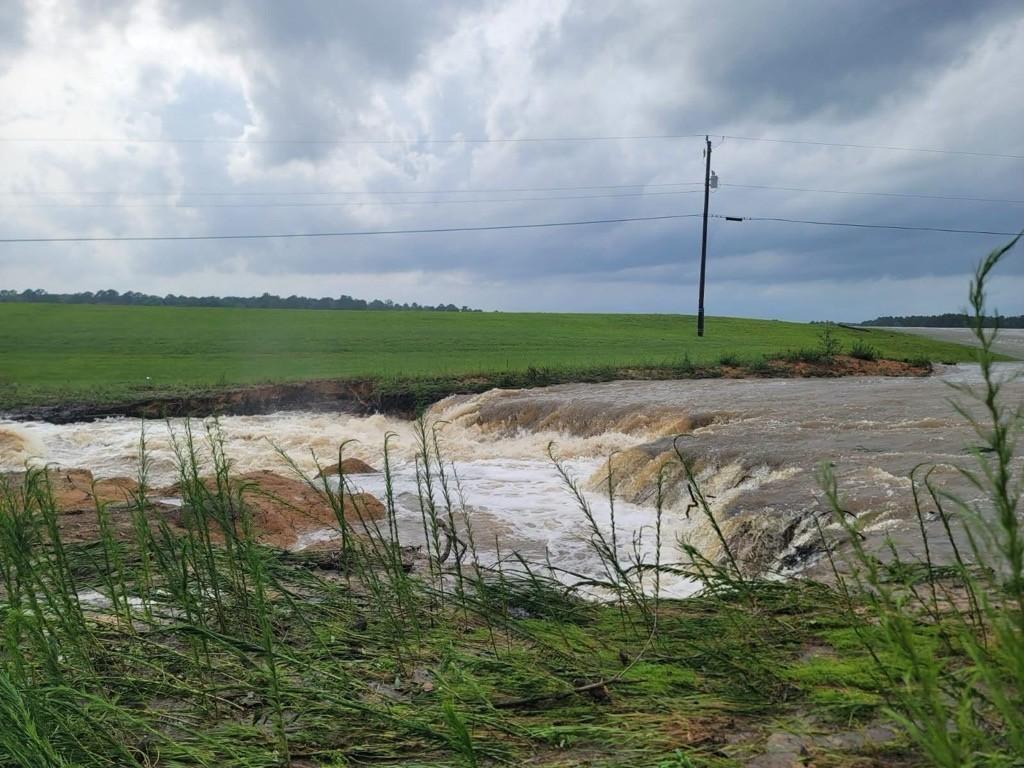
For Aniya Breland, 24, the flooding turned what began as an ordinary day into one her community will not soon forget.
Breland lives in Perkinston, where rising water from nearby Perk Beach overflowed onto U.S. Highway 49, trapping residents and cutting off travel. Breland couldn’t leave home until Friday.
"We were stuck at the house," Breland said. "We couldn't take the highway and even the back roads were overflowing."
She said friends and relatives were forced to escape flooded homes through windows before climbing onto rooftops and vehicles to await rescue.
"No one really expected it to hit this hard or be this much rain that we got," Breland said. "A lot of people just didn't expect this extreme weather, and now there are a lot of people who are without homes and clothing. There were pets that were lost."
Although Breland's home escaped major damage, she said many families lost nearly everything they owned. Community centers have since become temporary shelters, with volunteers collecting clothing, hygiene products and other necessities for displaced residents.
"Some people literally just had the clothes on their backs," she said. "They have nothing at all."
Emergency response organizations quickly mobilized as calls for help poured in.
Josh Gill, incident commander for the United Cajun Navy, said volunteers began coordinating rescue efforts shortly after reports of severe flooding emerged.
"When we heard about the floods, we started to receive some calls," Gill said. "I made some phone calls and found there were some issues around the Wiggins area, Pearl River County, Stone County and areas like that. I called Johnny Diamond, who's a member of the United Cajun Navy, and he said he would go help. He's got a high-water vehicle, and from there he recruited some additional people and they started search and rescue operations."
Gill said floodwaters have begun to recede in some communities, but dangers remain.
He urged residents to avoid driving through standing water, remain alert for wildlife displaced by flooding and prepare emergency 'go bags' containing several days' worth of supplies and important documents.
"We always recommend listening to your local officials," Gill said. "Flash floods are difficult. There's not always a warning."
The organization expects recovery efforts to shift toward distributing cleanup supplies and assisting families as they begin rebuilding.
"The biggest thing people are going to need is cleanup kits," Gill said. "For the families that lost everything, let's hope and pray that FEMA comes in and helps Mississippi out."
In neighboring Jackson County, emergency officials reported widespread street flooding, multiple lightning strikes to homes and several water rescues, though structural damage was less severe than in nearby counties.
Jackson County Emergency Management Director Earl Etheridge said officials are now watching water levels on the Pascagoula and Escatawpa rivers, where additional flooding remains possible.
"Right now, what we're doing since the weather system has moved on out of Mississippi, we're looking at potential flooding for the Pascagoula River and the Escatawpa River," Etheridge said.
Recovery, he said, will be a lengthy process for many communities across South Mississippi.
Nonprofit organizations including the American Red Cross, Salvation Army, United Way and Catholic Charities are helping residents begin cleanup efforts while local officials continue assessing damage.
Etheridge cautioned residents not to overlook personal safety while cleaning flood-damaged homes.
"You can strain yourself and put yourself in grave danger very quickly," he said. "If your structure's been weakened by the flood waters, you've got to be careful going in and out of it. So just remember safety first."
State emergency officials echoed those warnings.
Mississippi Emergency Management Agency spokesperson Scott Simmons said many flood-related injuries occur when people attempt to drive or walk through water that appears shallow.
"Turn around, don't drown," Simmons said. "It's more than just a phrase. It's a reminder of the importance of not taking risks that you don't have to."
Simmons encouraged residents living in flood-prone areas to prepare evacuation plans, gather medications and keep paper copies of important documents in case additional rainfall worsens conditions.
"We ask people to be vigilant and do not assume that the worst is past us," Simmons said. "Be smart, have a plan and pay attention to updates."
For Breland, the flooding has revealed both the vulnerability and resilience of her hometown.
"Stone County is a very small community, but it's a very strong community," she said. "A lot of people are coming together. If you can help, help. And if you need help, don't be afraid to reach out because community is really what's getting us through."