Your Page Title

Emmett Till memorial held at barn described as “ground zero” in 1955 torture

Email share
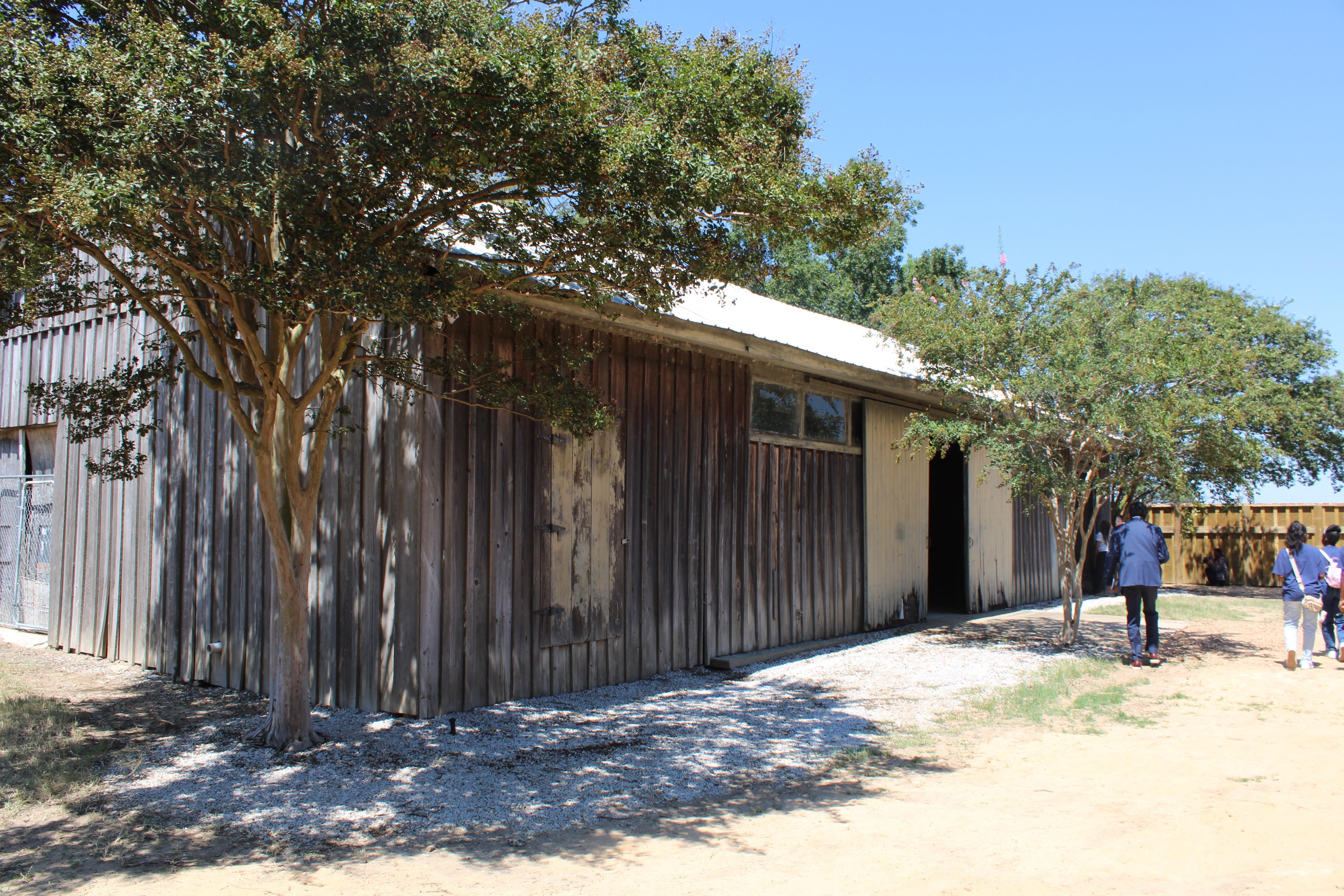
Visitors walk around the barn where 14-year-old Emmett Till was beaten and tortured on August 28, 1955. His body was found 3 days later in the Tallahatchie River. 
(Tiara Jackson, MPB News)

In a historic moment of reflection and remembrance, the Emmett Till Interpretive Center held its first memorial service at the barn where 14-year-old Emmett Till was tortured and killed in 1955, marking a pivotal step toward preserving his legacy and educating future generations.

The purchase of the barn is a new chapter for the center and for Till’s family, as they continue his legacy and fight for social change.

Tiara Jackson

“The barn is ground zero”: Emmett Till Interpretive Center holds first memorial on site Till was tortured

00:0000:00

Patrick Weems, the executive director of the Emmett Till Interpretive Center, noted that there was no memorial site honoring Till in 2004. With the center securing full ownership of the barn, it has now become a sacred site. “The barn is ground zero for the truth, that an innocent 14-year-old child was brutally murdered because of the color of their skin,” Weems said.

The barn was previously used as a storage shed. A fence now surrounds the property to separate it from the former owner’s home, providing visitors with safety and privacy to pay their respects to Till.

“We've brought together people from around the country to be with us to imagine what this future memorial can hold and it's going to be a big undertaking,” Weems said. “We're going to need a lot of resources to make this possible but the hope is that this is not just a memorial for 1955 or 2026, that this is a memorial that outlives us all and points us to human rights.”

Weems said reaching this milestone required a collective effort. “This is a hard, hard story to face. It's one that, you know, you understand why Mississippi ignored it for so long,” Weems said. “For us to be fully embodied, Mississippi and citizens to be patriotic to America,a reflective understanding of your past is necessary.”

The Emmett Till Interpretive Center will partner with the National Park Service and regional organizations, such as the Mound Bayou Museum, to preserve Till’s history.

Filer image
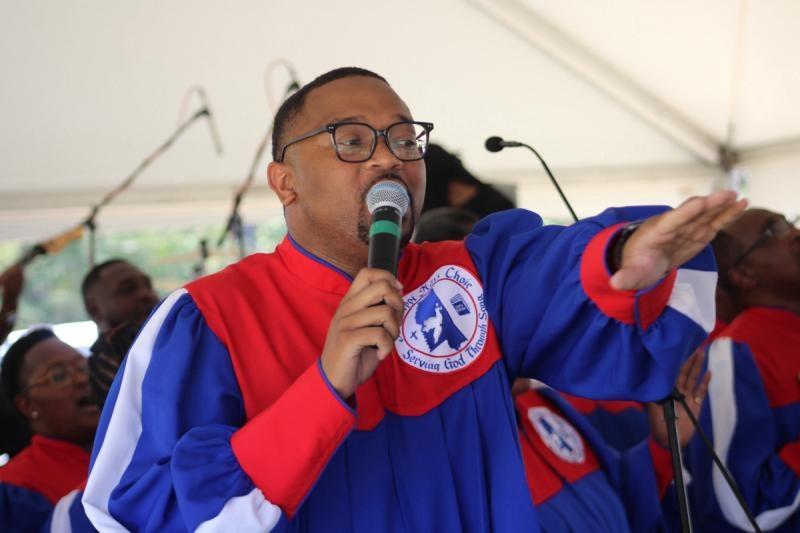
The Mississippi Mass Choir held a mini concert before the memorial. They led songs throughout the programs. 
(Tiara Jackson, MPB News)

Music performed by the Mississippi Mass Choir filled the air, while faith-based leaders spoke about forgiveness and hope for a better future.

The Rev. Willie Williams, board chair of the Emmett Till Interpretive Center, emphasized that the work surrounding Emmett Till’s legacy remains unfinished. Speaking to a cheering crowd, Williams noted that the concepts of reverence and sacredness have been central to protecting this history.

“Without forgiveness there's no freedom. Without forgiveness, there is no recovery. Without forgiveness, there is no healing,” Williams said.

Throughout the service, family members present during Till's 1955 abduction were honored. Moses Wright, Till’s great-uncle, famously testified and identified the two white men who kidnapped Till from his home. Mamie Till-Mobley, Till’s mother, insisted on an open-casket funeral in Chicago to show the world the brutal reality of racial violence.

The Rev. Wheeler Parker, Till’s cousin, is the last living relative who accompanied him to the Mississippi Delta. Parker, who was 16 at the time, was with Till at Bryant’s Grocery & Meat Market and present when Till was kidnapped. At the service, Parker recalled the terrifying moment the men arrived at his uncle's house.

“Other day, God reminded me 71 years ago, 16. I heard people outside of our door talking. I said, ‘God, I'm fixing to die. These people are going to kill us,’” Parker said. “I know what he had done a few days before could have been killed. If you didn't live in the fards and the fetches, you have no idea what it was like and how far we'd come. We'd come a long ways.”

Drew native Coronda Watson attended the service with her family and sang with the Mississippi Mass Choir. Watson grew up hearing stories of Till from her mother, who was 6 years old when Till was killed. They joined hundreds of attendees touring the inside of the barn.

“I feel the spirit of fear and just imagining that he may have screamed and hollered and there's a lot of things but no one heard him,” Watson said. “We hear you, Emmett. We understand you, we see you, and his legacy will not go unnoticed. I just couldn’t imagine a person, just a black person, but an actual human being enduring what he endured.

Filer image
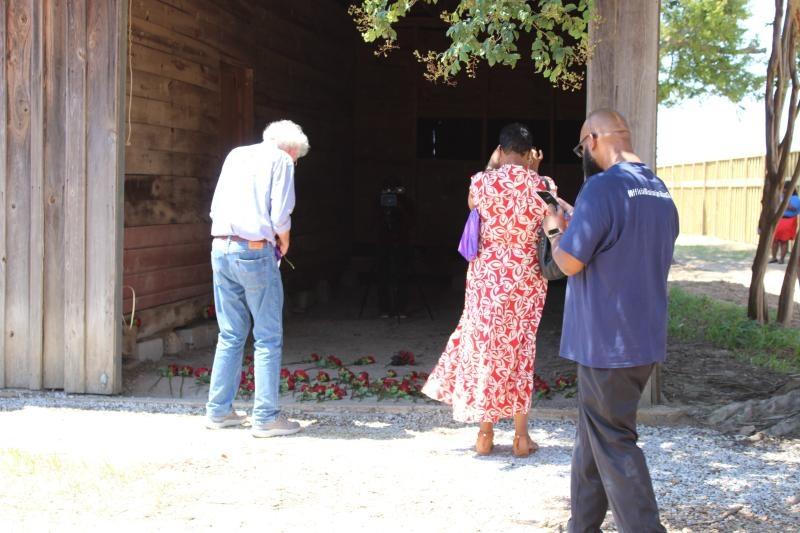
Visitors lined outside the barn to pay respects to Till. 
(Tiara Jackson, MPB News)

Watson’s daughter, Layla, 15, noted that she is a year older than Till was when he was murdered, expressing gratitude for her life while learning about her history. “He didn’t get to experience some things that I was able to experience now being 15,” Layla Watson said. 

“So I’m grateful for life and that I get to grow up because he did not get to do that.” Coronda Watson added that historical sites like the barn must remain central to Civil Rights education.

Weems said visitors traveled from across the globe to commemorate the historic occasion. Among them was George Porteous, who traveled from New York to the Delta to connect with his family roots. His grandmother grew up in the Mississippi Delta, and he first learned about Till in high school.

“I think all white Southerners, and especially people with roots in Mississippi, there’s a debt to be paid,” Porteous said. “There’s a reckoning to be had because Emmett Till was not only killed by individuals, he was also killed by a culture of white supremacy.” Porteous added that there is a moral obligation to work toward a better world.

“Just to know this is the site of so much violence and so much pain, but at the same time, incredibly moving to see this many people coming together to try and overcome that violence and that pain and to name it, acknowledge it, and try to replace it with something more beautiful,” said Poreteous. 

Filer image
The statue of Emmett Till is one of the many sites people can visit and learn more about Till. 
(Tiara Jackson, MPB News)

The day before the memorial service, Jackson Mayor John Horhn gave Till’s family members a proclamation at the State Capitol. Till’s cousin, Deborah Watts, said it’s not just about honoring Till, but giving justice to black families who are currently going through grief from hate crimes. 

“We’ve been waiting for an apology from the state of Mississippi since 1971. There was an apology issued for us in 2007 when we were in Sumner, but never from the state.”

Watts said she challenges the governor to acknowledge Emmett’s contributions. 

“Emmett’s mother made it important for all of us. She woke up the consciousness of America when she opened the casket of Emmett to show what hate looked like. It is important for us to remember so it doesn’t happen again. We believe we set the blueprint so that families can move forward also with courage, expecting accountability and truth and justice as we have been doing for the last 21 years,” said Watts. 

The family of Till says the fight is not over and they will continue to work with other families who have gone through the same thing as them across the country. 

Patrick Weems said there is still work to be done to ensure Till’s legacy is preserved. 

“If we want to see the policy change that we desperately need in this state, we have to do the heart and soul work,” said Weems. “And for me, it’s how do we shift culture, because once you shift culture. Policy will follow.” 

Weems said by 2030, the center will honor Till on the 75th anniversary of his lynching with the barn being fully open to the public