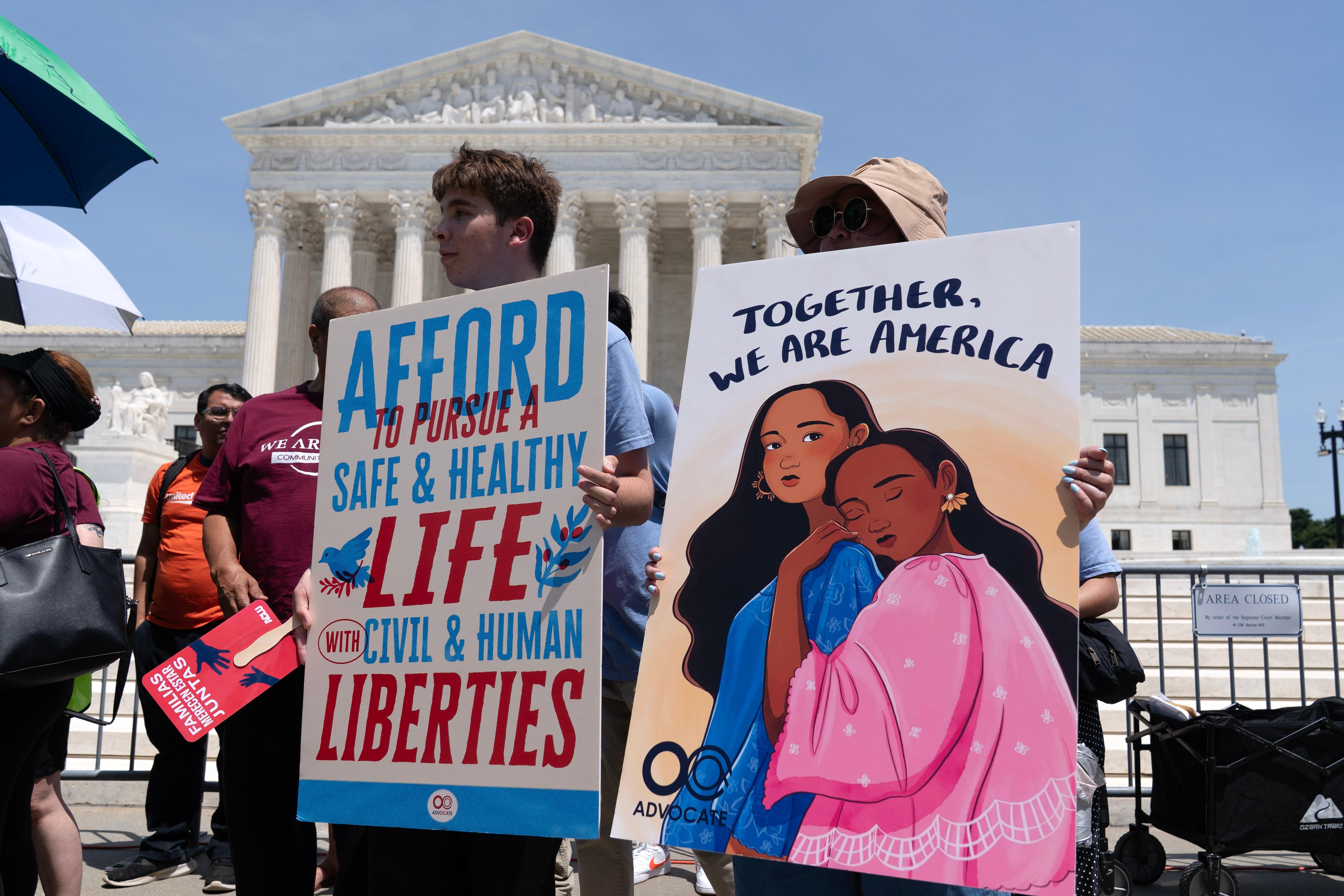
In a 6-3 ruling, SCOTUS affirmed that the citizenship right of the 14th amendment extends to anyone born on U.S. soil.
President Trump's executive order from January of 2025 sought to keep that automatic right from children born in the U.S. to parents in the country temporarily or unlawfully.
A key point made by the High Court was that children born in the U.S., regardless of parental status, are still subject to U.S. law. Jade Craig, who teaches constitutional law at the University of Mississippi, said the Trump administration's argument rested on basing a child's relationship with the U.S. on their parent's residence in the country.
But, Craig said, that argument doesn't interpret the idea of being under U.S. jurisdiction in the conventional way.
"A child has to comply with U.S. law just like everybody else and so they are covered under its jurisdiction," said Craig. "The relationship is also reciprocal: if you're entitled to the protection of the law of a particular country, you're also subject to it."
As such, the court ruled that with a child being under the jurisdiction of the U.S., citizenship is a right under the 14th amendment.
"Citizenship, then and now, was the right to have rights— to freely participate in our political community," wrote Justice John Roberts in the majority opinion. "The Framers of the Fourteenth Amendment extended that promise to 'every free-born person in this land.'"
"We keep that promise today."
That amendment came from Reconstruction-era protections to integrate formerly enslaved Americans.
"The purpose of the amendment was to provide a new rule of citizenship, which is that every person born in this country becomes a citizen, and that is the framework or the set of constraints in which Congress must operate," said Craig.
It was, in part, a way to overturn the 1857 Dred Scott v. Sandford decision, which deprived enslaved Americans of the right to citizenship.
"What the Civil Rights Act began, the Fourteenth Amendment would finish," Roberts wrote in the Tuesday ruling. "Like the Act, the Fourteenth Amendment was intended to repudiate Dred Scott."
"This time, however, the goal was even grander—to put the “great question of citizenship” “beyond the legislative power” altogether, to settle the issue once and for all."
This week's ruling is one that L. Patricia Ice, director of the legal project at the Mississippi Immigrant Rights Alliance, said brings relief for immigration lawyers like her across the country, as well as the people they serve.
"For my clients, now they do not have to worry about having a child here and whether that child is a U.S. Citizen or whether that child is stateless or some other scenario," Ice said.
An opposite ruling wouldn't have just affected immigrants, said Craig, but U.S. citizens as well.
"For U. S. citizens, the parents would have to present their own proof of citizenship in order to provide citizenship to their child," said Craig.
While the relief is real, for Ice, this ruling isn't something to celebrate completely.
"We don't think that this even should have gone to the Supreme Court," she said. "We don't that there should have been any issue on this in the first place."
"We don't necessarily celebrate with joy the decision of the Supreme Court, because we feel like the question shouldn't even gone there."
While President Trump is pushing for Congress to pass legislation to end birthright citizenship, like an executive order, anything short of a constitutional amendment would likely be considered overreach.
"The benefit of this ruling is that it continues that forward march of progress in America, where every person is part of this country not because of their blood and not simply because of the soil, but because of our ideals," said Craig. "The ideal that every person is free and equal and entitled to the dignity and equality before the law."