Your Page Title

‘We are a sleeping giant’: Mississippi’s Civil Rights veterans reflect on Callais decision

Email share
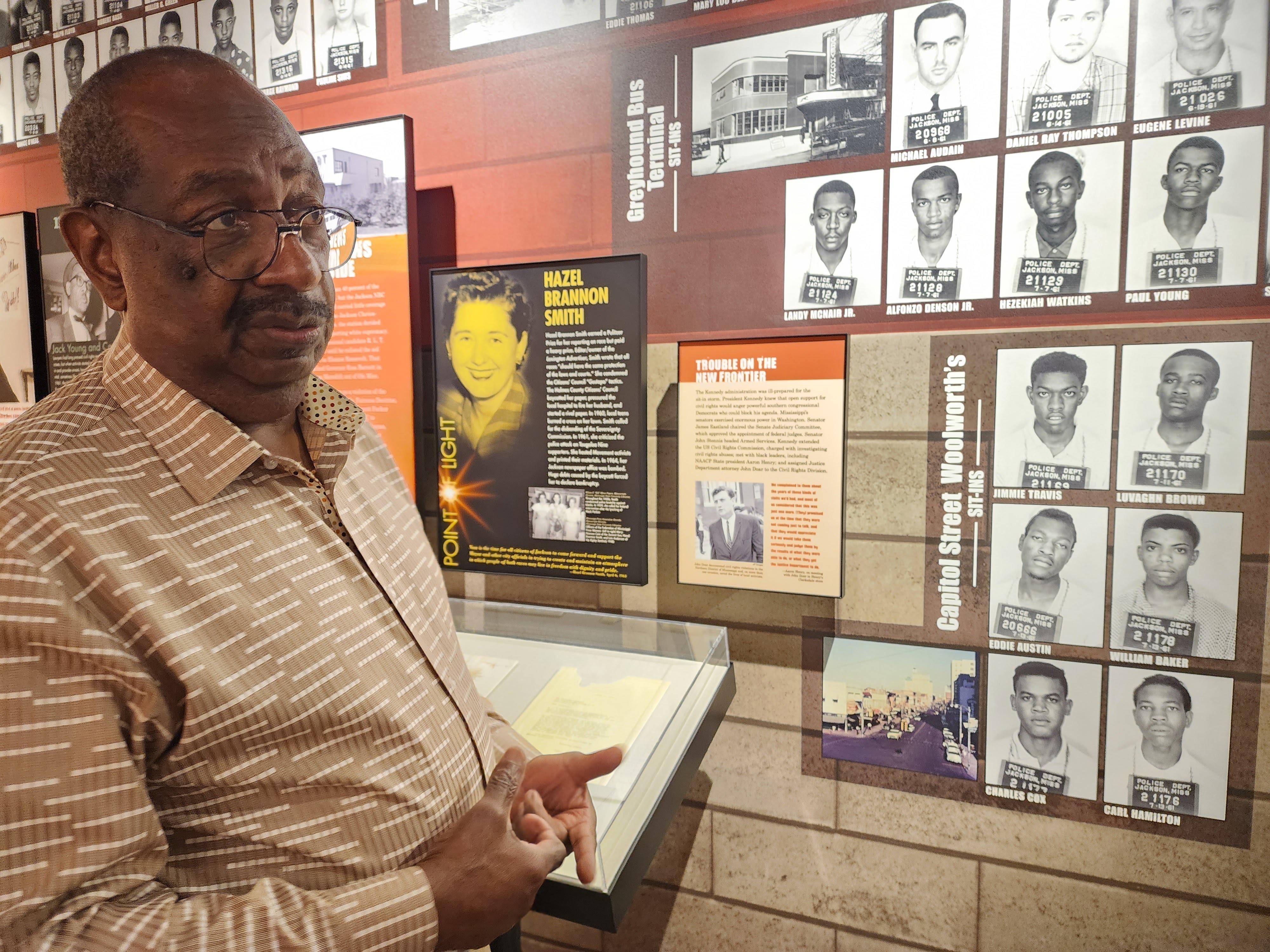
Civil Rights activist Hezekiah Watkins pictured here at the Mississippi Civil Rights Museum, where he works as a docent.
Kobee Vance, MPB News

About a week after the United States Supreme Court handed down its decision in Louisiana v. Callais, Mississippi Civil Rights activist Hezekiah Watkins was en route to Alabama for a reunion to commemorate the 65th anniversary of the Freedom Rides

Elise Catrion Gregg

‘We are a sleeping giant’: Mississippi’s Civil Rights veterans reflect on Callais decision

00:0000:00

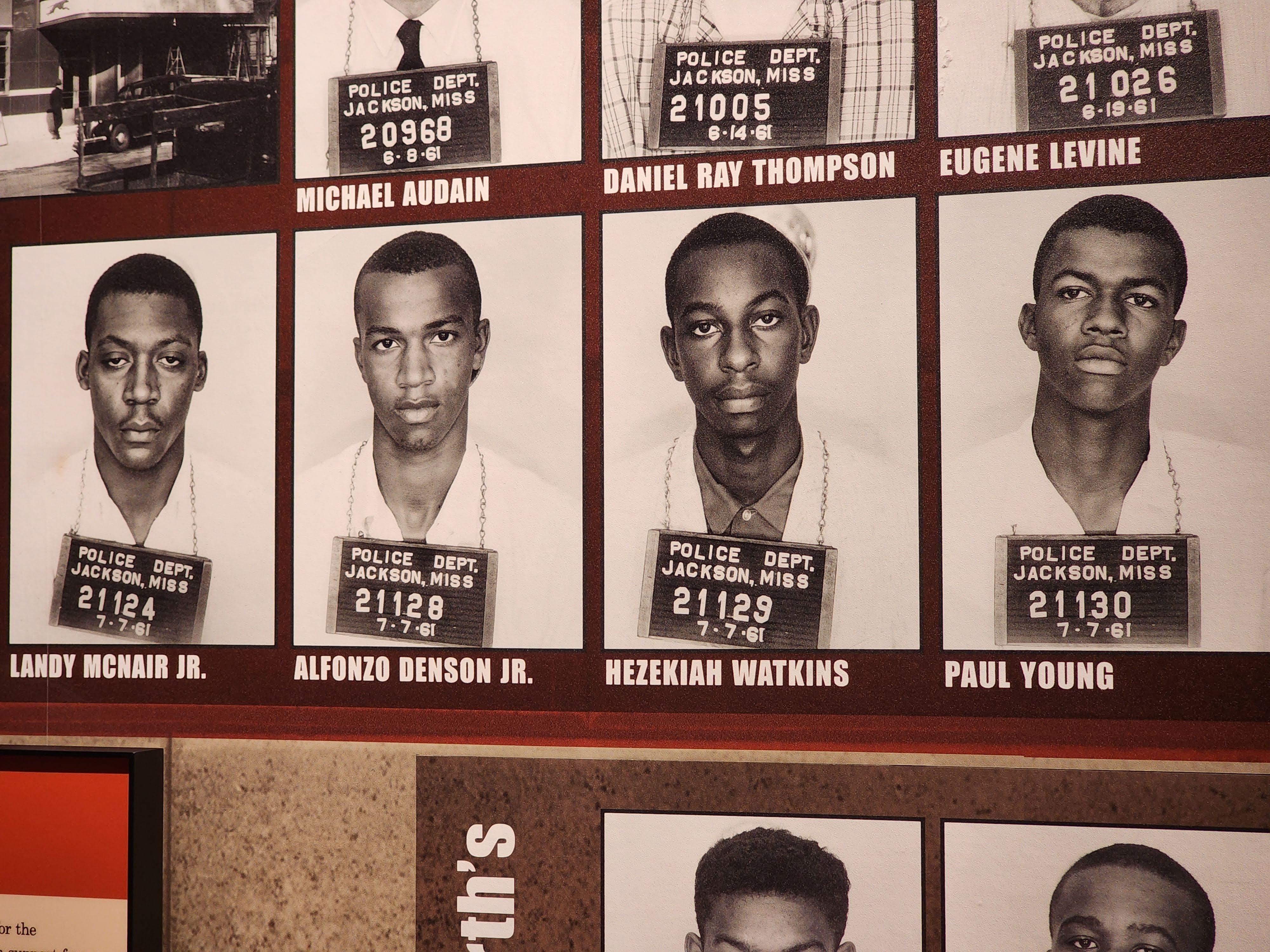
Watkins, who is now 78, was only 13 when he was arrested in Jackson, Mississippi, for visiting the Greyhound Station where the Freedom Riders had arrived in 1961. 

Filer image
Watkins, now 78, was arrested at 13 years old in Jackson, Mississippi as part of the 1961 Freedom Rides.
Kobee Vance, MPB News

Four years later, the work of the Civil Rights movement would lead to the establishment of the Voting Rights Act in 1965, prohibiting racial discrimination in voting and giving minority voters in the U.S. a fair shot at effective political representation. 

Following the Callais decision, which makes it difficult to challenge electoral maps based on racial discrimination, the Voting Rights Act has weighed heavily on Watkins' mind.

“When this bill was signed, I think everybody and their mama and their daddy thought it was here to stay,” Watkins said. 

It's been the topic of many conversations at the reunion, so far, he said. It's brought a lot of camaraderie but also concerns about what's next. 

“We have not been able to pass this torch on to anyone,” Watkins said. “We're all old, but if it takes old folks like we are to do it, then we are willing to sacrifice whatever is left in us so we can try to deter these things.”

Disappointed, but not surprised

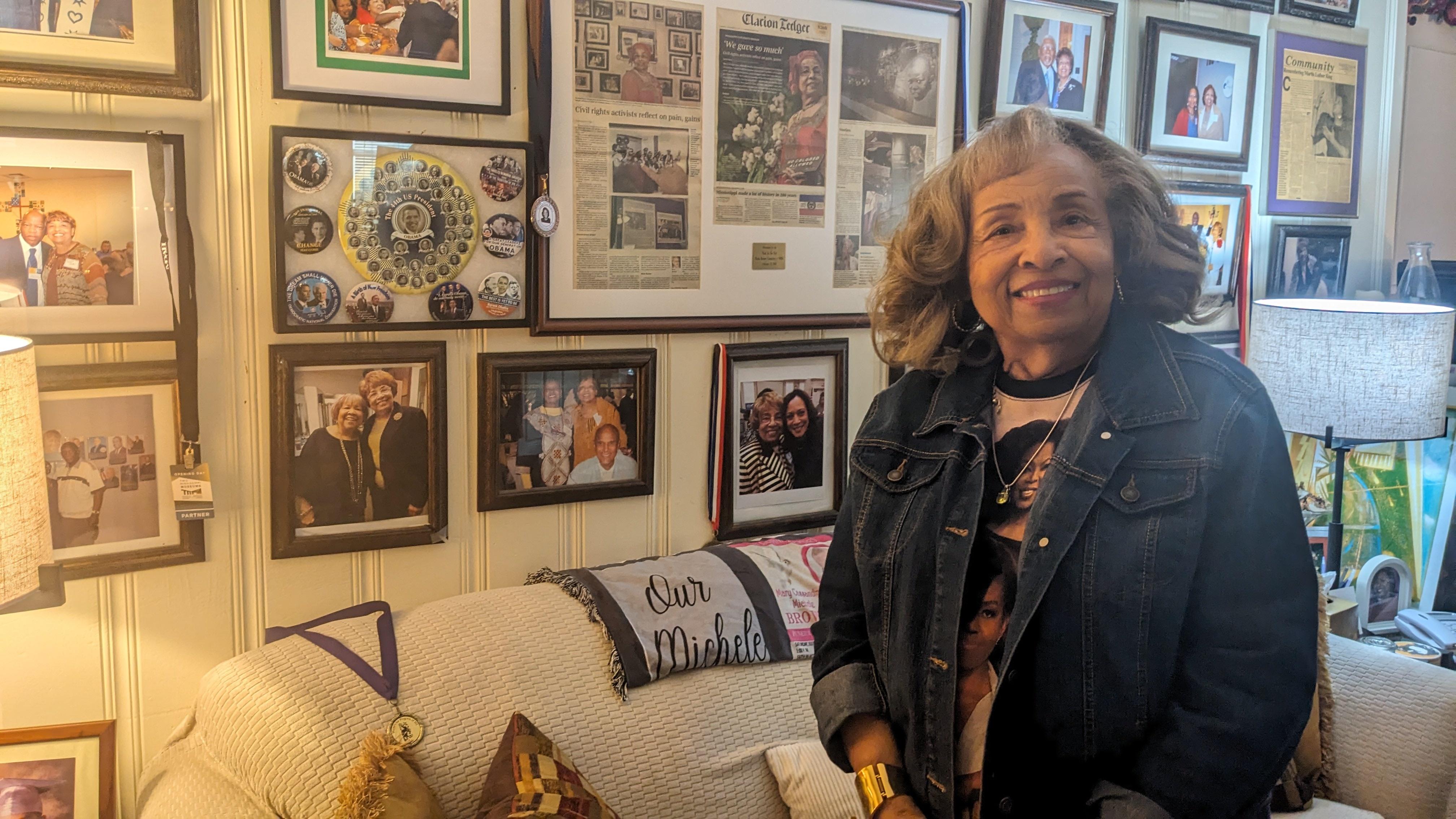
Civil rights activist Flonzie Brown-Wright helped lead marches and filed lawsuit after lawsuit to fight discrimination from her home of Canton, Mississippi, in the 1960s and 1970s. 

It was there that she also made history in 1968.

“I was elected, not only as the first Black election commissioner, but as the first Black female to be elected to a position in a biracial town in Mississippi,” she said.

Filer image
Flonzie Brown-Wright in her Jackson home on May 5, 2026. Behind her are photos of her with other influential African-American politicians, activists and leaders.
Elise Gregg, Gulf States Newsroom

That was a turning point for equality in her state.

Today, Brown-Wright sees the Supreme Court's Callais ruling as backsliding from the work of the Civil Rights movement. 

“I was very disappointed with the decision, but I was not surprised,” she said. “There has been, from my perspective, an ongoing effort to water down — to weaken — the Voting Rights Act.”

Before she was Canton’s elections commissioner, her activism had taken her to the nation’s capital to push for the Voting Rights Act.

“I was one of the ones who went to Washington in early ‘65 to lobby for the Voting Rights Act,” she said. “When I was born, I didn't have the right to vote, and my parents didn't have the right to vote. So we had to really lobby.”

Since the Callais decision was handed down, states across the Gulf South have initiated special sessions to redraw districts in ways that will likely benefit the Republican party, but might also dilute the power of Black voters. 

A special session for redistricting in Alabama has already started, with Mississippi's special session to redraw state Supreme Court districts set to start May 20. Louisiana is taking time during its regular session to redraw congressional maps

Brown-Wright has concerns, like Watkins, about how people will push back to protect civil rights following this decision. 

“I hope it will be a wakeup call that your vote does count,” said Brown-Wright. “If the results are not to your satisfaction again, you can lie down at night knowing that you did your best.”

The last thing she says she wants to see is people giving up because they’ve been discouraged by developments like the Callaisdecision. 

“I think about those old soldiers who laid a footprint for me and for my people. We can't squander it,” Brown-Wright said.

‘We have a presence now’ 

For Leslie-Burl McLemore, former field secretary for the Student Nonviolent Coordinating Committee (SNCC) and professor emeritus at Jackson State University, the work of the Civil Rights movement has built a foundation to meet the challenges of 2026. 

“Quite frankly, we are a sleeping giant,” McLemore said. “We are, in Mississippi, in terms of Black elected officials.”

Like with the work he did and the work of other Civil Rights activists, he sees protections for voting rights in the groundwork of people — especially elected officials — at the local level. 

“When we started in 1960 or ‘61 in Mississippi, there was not a Black mayor in Greenwood,” he said. “There was not a Black mayor in Jackson, there was not a Black Mayor in a number of these small towns. So we have a presence now, politically, that we didn't have in 1960 and 1965.”

Filer image
Leslie-Burl McLemore, a retired Jackson State University political science professor and longtime civil rights activist, speaks July 10, 2024, at the Mississippi Civil Rights Museum and Museum of Mississippi History in Jackson, Miss.
AP Photo/Rogelio V. Solis

His call to action is much the same as Watkins and Brown-Wright's: for people to vote, stay engaged and to use local organizing to move the needle.

“Let's take advantage of our positions on the board of supervisors and in these town governments and city governments,” he said. “Let's take advantage of these positions, in order to make sure that we don't move any further back.”

And for him, the power is in unity and coordinated organizing. 

“In Mississippi, where we are 38% to 40% of the population, we can have the kind of impact that people cannot have in a lot of other places because of our numbers,” he said.