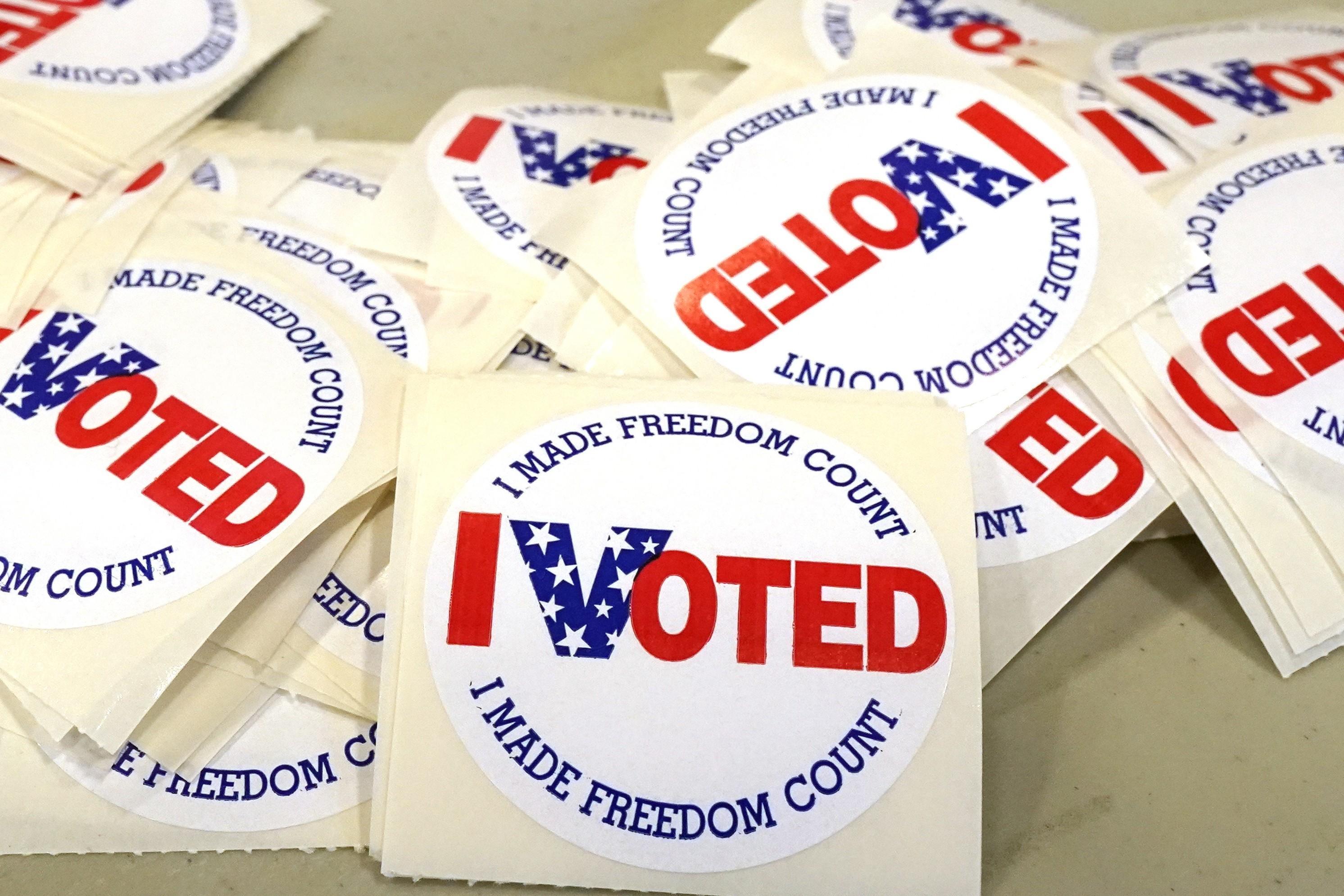
Redistricting has spurred voting rights advocates into action as Mississippi's Governor Tate Reeves considers a special session to redraw congressional lines.
Organizations across the state are setting their sights on recently enacted legislation, and they aim to educate voters on their rights at the polls.
The Gulf States Newsroom's Maya Miller spoke to Sonya Williams-Barnes, Southern Poverty Law Center's Mississippi Policy Director, about the SHIELD Act, redistricting and the importance of the Black male vote.
The following conversation has been edited and condensed for clarity.
Maya Miller | Gulf States Newsroom
A Q&A with SPLC Mississippi: 'When your vote is not there, your voice is not there'
00:0000:00
100%
MAYA MILLER, host: Thanks for joining me today, Sonya. Walk me through some of the legislative priorities that the SPLC is focusing on this year.
SONYA WILLIAMS-BARNES: This past legislative session, one of the largest things that we worked on was the SHIELD Act. The SHIELD Act basically came into play and went into effect July 1st, and it is another barrier for voters and for people registering to vote, and having to provide an additional form of identification in order to register to vote.
Sonya Williams-Barnes is the policy director for Southern Poverty Law Center Mississippi.
Now we are in the process of sharing with community and preparing them for some of the barriers that the SHIELD Act could possibly provide when they get ready to register to vote.
MAYA MILLER: What could this mean for Mississippians who are attempting to register to vote?
SONYA WILLIAMS-BARNES: What it could mean is that they would have to have additional forms of identification proving that they are a citizen. A birth certificate would be one. A passport could be one. There are many people that don't have those. It costs to have them. It costs to get them. Even some of our seniors that were born many, many years ago, they may not be able to even get a birth certificate.
Also, women who have gotten married and changed their names, they would have to provide their marriage license, their birth certificate just to show that their name has been changed. So it could become a barrier. However, when people are educated and they know what the challenges could be, then they are prepared. It is our business to make sure that our residents are prepared for those challenges.
MAYA MILLER: Redistricting has become one of the key issues to come out during this midterm year. In Harris v. DeSoto County, which was decided earlier this summer, plaintiffs argued that the electoral maps were racially discriminatory. The court says that's not the case. What's your take?
SONYA WILLIAMS-BARNES: It is important that we understand that representation actually matters, and ensuring that every community, every person in community, every group of people in community, have an opportunity to elect candidates who understand their experiences, who understand their lives, their communities, and those people actually make those things a priority. With redistricting, it shapes how communities are represented.
MAYA MILLER: What do you want residents to know about redistricting?
SONYA WILLIAMS-BARNES: I want residents to know that it is important that they are represented and that they are able to elect people who will make their voices heard, who will put them as a priority in their endeavors as elected officials, especially those that come from rural communities. Many times, communities of color and seniors will not be represented with their issues if they don't have someone who knows what their issues are and makes those issues a priority for them.
MAYA MILLER: Your work takes you all over the state, especially into rural places where the impacts of harmful legislation can be felt most acutely. What are you hearing from rural communities? Any concerns around elections and voting?
SONYA WILLIAMS-BARNES: There are concerns about elections and voting throughout our state, especially in Black communities, because our communities are underrepresented. That's why we have encouraged things such as the Black Men Matter event because our Black men are not just voters of tomorrow; they're our leaders. They're our entrepreneurs, our students and veterans. It's important that those groups understand how important it is to vote, and how when you don't vote, you have less influence over decision-making, over education that comes to your communities, over jobs that come to your communities, even public safety and healthcare and economic opportunities. When your vote is not there, your voice is not there.
MAYA MILLER: That leads into my next question. Why is it so important to mobilize and engage Black male voters, especially as we approach midterms?
SONYA WILLIAMS-BARNES: Just to ensure that they vote, that their voices are heard, that they are a part of the formula that brings money to their communities, that they are part of the decision-making that takes place, through laws or through ordinances there in their cities. It's important that their voices are heard, and the only way their voices can be heard is through their vote. It's important that we let young Black men know that we don't let anyone convince you that your voice or your vote doesn't matter. Every generation is faced with obstacles of participating in voting, and it has been for years, even before the Civil Rights Movement.
It's today's generation that is responsible for making sure that their vote matters, that their vote counts, and that it will definitely impact their quality of life. It will definitely impact their communities. They have to do this. They have to vote.
What I have made as kind of my thing lately is to make sure that every opportunity I get, I share with the community the importance of registering to vote. If you're already registered to vote, make sure that you verify your registration. Know where your polling place is, and also help family and family members and friends to vote. I'm making sure that everyone exercises their right to vote, and it's important to stay informed on different issues, not just during the election season, but all year long, all year round.
Make sure that you know who represents you and reach out to them and share with them any challenges that your communities are having, that you're having as an individual or as a family. It's important that your legislators know, your elected officials know, even on the local level; make sure that your mayor and city council know the issues that you're having in your community. Stay informed. Stay involved.