Across Mississippi, residents are voicing redistricting concerns at public hearings

Email share
• Comments
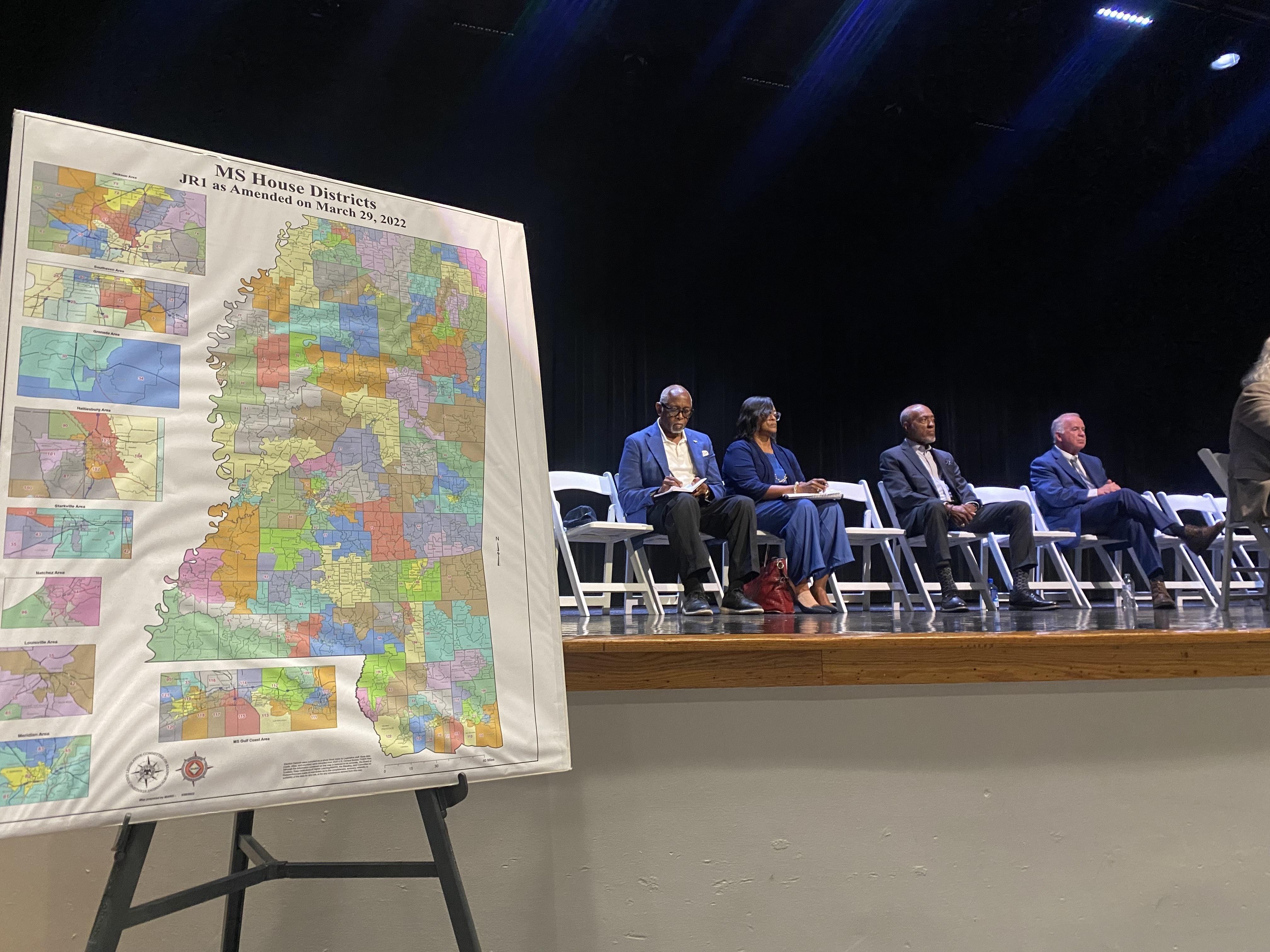
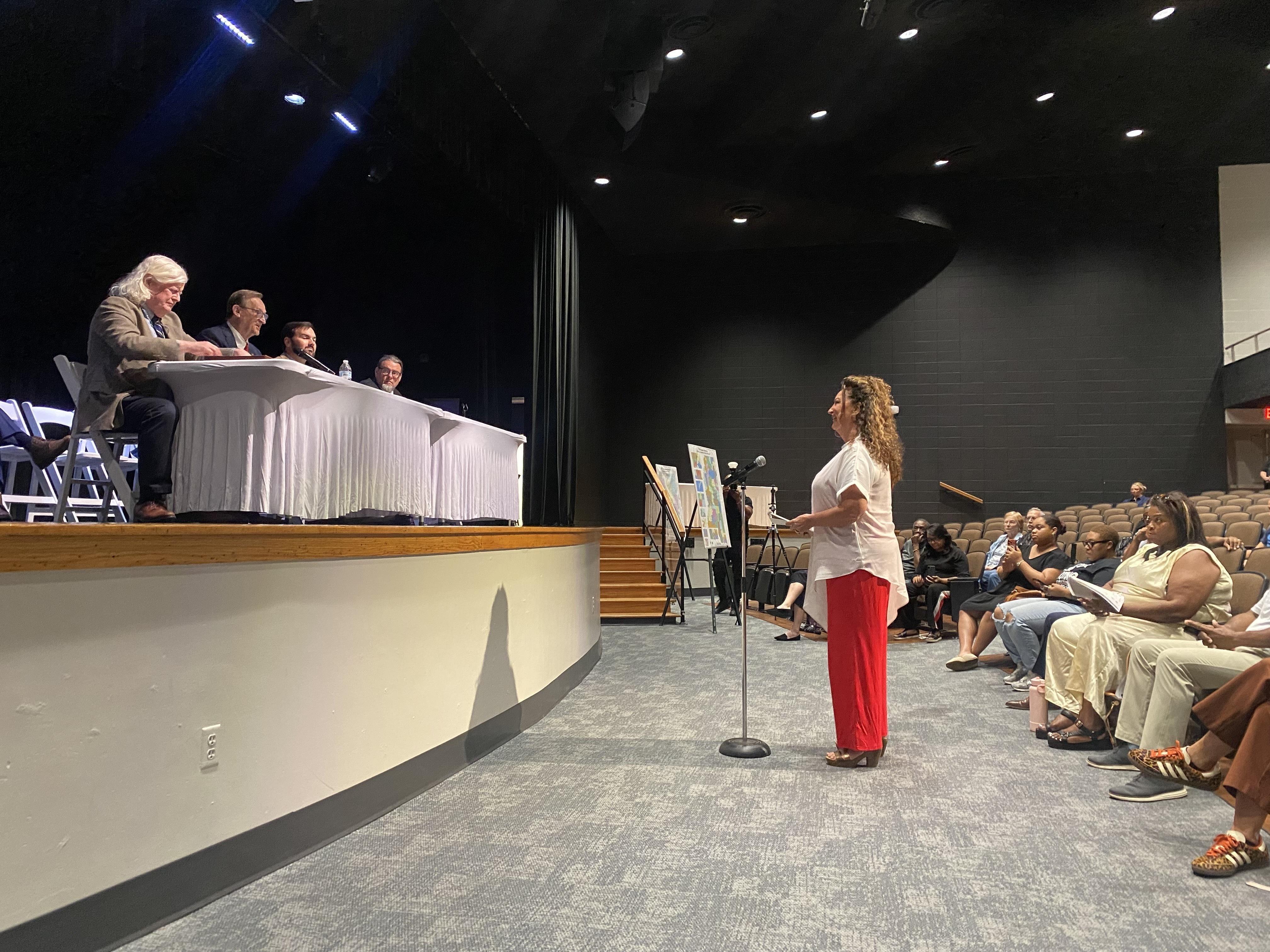
The Joint Legislative Committee for Redistricting and Reapportionment opened the floor for public comment at a redistricting hearing in Meridian, Miss. on Sept. 10, 2026.
Maya Miller/Gulf States Newsroom

Joyce Arceneaux-Mathis has a question for Mississippi's Joint Legislative Redistricting Committee.

 "What is the true goal of this committee?" Arceneaux-Mathis asked. 

Arceneaux-Mathis, the president of the local chapter of the NAACP, is one of nearly 100 people who have filled the auditorium at Alcorn State University's Natchez campus this early September evening. She stands at the microphone, looking up to the stage where a dozen legislators sit, and states her argument. 

"Why is this process necessary? Has Mississippi ever engaged in mid-decade redistricting before? Have you evaluated the cost, the consequences and the waste of taxpayer resources that premature redistricting would create?" she asked. 

Maya Miller | Gulf States Newsroom

Across Mississippi, residents are voicing redistricting concerns at public hearings

00:0000:00

The Joint Legislative Redistricting Committee has held seven public hearings across the state to allow Mississippians the opportunity to voice their concerns on redistricting in the wake of Louisiana v. Callais. The U.S. Supreme Court decision says states cannot consider race when drawing congressional lines, effectively weakening Section 2 of the Voting Rights Act of 1965. 

In Louisiana, lawmakers moved quickly to redraw lines. In Alabama, a map that was previously ruled unconstitutional was signed into law, shifting lines of a majority-Black district further east. But in Mississippi, Republican Gov. Tate Reeves called lawmakers in for a special session, which he quickly cancelled. 

Now, the Joint Legislative Redistricting Committee has opened the floor for oral and written comments on whether the state should redraw its voting maps. 

Arceneaux-Mathis said Mississippians are living in an economic crisis, and redistricting ahead of the 2030 census places unfair strain on taxpayers. 

"Why are we spending it on this when a lot of people are suffering with gas prices? A lot of people are suffering with no vouchers for their children to go to daycare. The hospitals are closing," she said. "So why are we going to spend money in a manner like this?" 

Redistricting mid-decade would widen the divide between voters and lawmakers, she said, and prevent equal representation. She also believes it would give Republicans more control than they already have. 

All of the higher statewide offices, including the secretary of state and governor, are filled by Republicans. The only Democrat elected official is Congressman Bennie Thompson, whose district covers most of Jackson and the western counties, including part of the Mississippi Delta.  

Arceneaux-Mathis wasn't the only person to speak who opposed redistricting. Kathleen O'Beirne, founder of Mississippi United, said she came to speak in front of legislators to remind them that the Callais decision didn't mandate mid-decade redistricting for any state other than Louisiana. 

"I think it's obvious to a lot of us Mississippians that the thought of redistricting at this point is really born out of racism," O'Beirne said. "The Supreme Court said in the Callais decision effectively that it's totally fine for Black Mississippians not to have the same opportunity to elect a candidate of their choice as I have." 

O'Beirne said this push for redistricting isn't just a local one, but a national one. Across the United States, lawmakers are using the Callais decision to redraw lines in Republicans' favor, she said. 

"This redistricting effort that's going on throughout the country is all about Donald Trump getting through the midterm elections unscathed, in spite of his growing unpopularity and in spite of all the damage that he has done to America, including to Mississippians," she said. 

That damage includes refusing to expand Medicaid and importing beef that otherwise would have come from local farmers. 

"All of our farmers are struggling due to high diesel fuel costs thanks to this war in Iran that's completely illegal, thanks to tariffs," O'Beirne said. "So what good is redistricting going to do for those folks?"

Filer image
Tamara Ward of Neshoba County urges lawmakers to redraw every map in the state, including congressional and judicial maps, on Sept. 10, 2026.
Maya Miller/Gulf States Newsroom

In Meridian, almost 200 miles from Natchez, about 40 people have gathered at the McCain Theater at Meridian Community College for another public hearing with the Joint Legislative Redistricting Committee. 

It's quieter here, but some residents scratch away at their notes as they prepare to take the microphone. 

Tamara Ward is pro-redistricting, and she told lawmakers that every district should be redrawn, not just congressional. 

"I would compel the Legislature to promptly review and redraw congressional, state, legislative, regional and state Supreme Court lines, and do it on a race-neutral basis. Not just race neutral, but all neutral," the Neshoba County resident said. 

While she may not agree with other people's politics, Ward believes that everyone has the right to voice their opinions. 

"We don't need to be divided by one criteria or another," she said. "We need to all be united and let's talk to each other." 

Rosemary Robinson agreed. The Noxapater resident wants to see the lines drawn in a race-neutral way that's good for the community. 

"Ultimately this is going to affect our elections," Robinson said. "I think anything that protects that process is something that we need to address." 

But retired educator Linda Posey said she's offended by lawmakers considering redistricting outside of the census years. 

"The fact that they want to take the few representations we do have away, I think, is a disservice to every person of color in the state of Mississippi," Posey said. 

She pointed to Mississippi having a large population of African-Americans with only one Black congressman. According to 2020 U.S. Census data, Mississippi is just over 36% Black. Meridian has more Black residents than White.  

While Posey doesn't live in Thompson's district, she said she'd like to see more people of color on the ballot. 

Ramona Sanders, a Democrat who lives in Meridian, said that mid-decade redistricting should be illegal. While it's not illegal, the U.S. Supreme Court decided Purcell v. Gonzalez in 2006, stating that redistricting should not be done so close to an election to avoid voter confusion. 

"We know this is wrong," Sanders said. "We know this is a power grab for the Republican Party." 

Sanders warned legislators that following other states and President Trump's demands might make Mississippi lawmakers vulnerable to legal action.  

"These people don't understand that when you do this, you're capitulating to the entities that's in that White House. They better remember Nixon," she said. 

Sanders is concerned about the conditions that Mississippians are living in. Not much has changed since the Voting Rights Act passed, she said. 

"Sixty-two years later, we're still fighting for better education, better housing, better health care, access to quality food,” she said. “We should not still be fighting this fight.” 

The next redistricting public hearing will be held at the Mississippi State Capitol on Thursday (Oct. 1) at 6:00 p.m.

Maya Miller is a Report for America corps member covering democracy and government for the Gulf States Newsroom. This story was produced by the Gulf States Newsroom, a collaboration between Mississippi Public Broadcasting, WBHM in Alabama, WWNO and WRKF in Louisiana and NPR.