


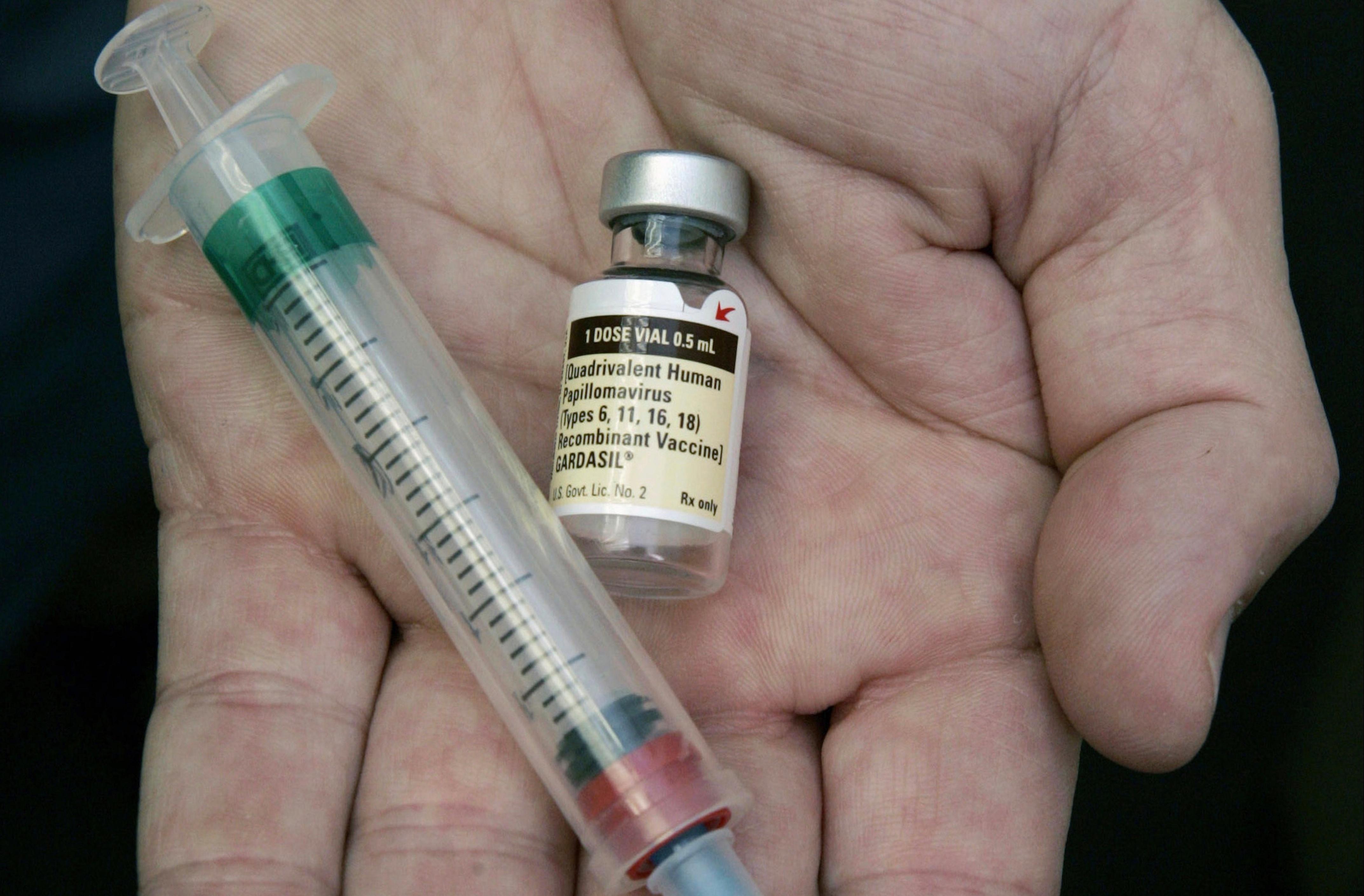
Health officials and researchers are working to raise awareness about the human papillomavirus vaccine, which can prevent several types of cancer, including cervical cancer. The disease disproportionately affects women in Mississippi.
Many residents in rural areas of the state have never heard of HPV or the vaccine that helps prevent it. Latoya Lowe, a community-based researcher in Humphreys County, said a lack of information is contributing to high rates of HPV-related cancers.
She interviewed more than 26 women in the Mississippi Delta during 2023 and 2024 about their experiences with cervical cancer prevention and reproductive health. “One of the most important things that came out of the research is a lot of women had not heard of cervical cancer or especially the HPV vaccine,” Lowe said.
Mississippi has the highest cervical cancer death rate in the country. Between 2018 and 2022, 719 cases were reported in the state. Of those, 313 women died. Signs and symptoms may not appear right away, making early detection and prevention critical.
According to the Mississippi Department of Health, the HPV vaccine can prevent several cancers, including cervical, penile, anal, throat, tonsil and base-of-tongue cancers. It also protects against genital warts.
To address the lack of awareness, the University of Mississippi Medical Center and the American Cancer Society are developing a public education campaign. The campaign will focus on rural communities and inform residents about the benefits of the HPV vaccine and the importance of preventive care.
Shemmente Jones, a 45-year-old nurse practitioner and mother of three from Jackson, shares her personal experience with cervical cancer at informational events. She said she first noticed a small discharge in 2016 that she had not seen before. Despite increasing visits to her OB-GYN, she was given recommendations like using a different detergent.
Jones said she underwent Pap smears but did not follow up to get the results, assuming they were fine since she had not heard from her doctor. Then, in 2017, she got a call from her doctor. “She said I had cervical cancer,” Jones said. She was 37 years old at the time.
Jones changed doctors, and her new OB-GYN performed a cold knife conization, a surgical procedure used to remove a cone-shaped piece of cervical tissue. The doctor told her the disease had spread to her ovaries.
Jones said her options were limited. “So, I had to have a total hysterectomy. When the tests came back, I didn’t have a choice. I had to do radiation Monday through Friday from August through October.”
She explained that the high doses of radiation burned her skin and made it difficult to eat. “I went from 170 pounds to about 120 pounds,” Jones said. She believes that if she had been diagnosed sooner, less invasive treatment could have been used. “They could go in and freeze the precancerous cells to prevent them from developing into cancer cells, or they can go in and pull the lining out where the precancerous cells are and strip that lining out of the cervix,” she said.
Dr. Tami Brooks, medical director with the Mississippi Department of Health, said she wants to prevent experiences like what Jones endured. “Even though she’s cancer free now,” Brooks said, “working with the American Cancer Society and the University of Mississippi Medical Center is critical to increase awareness about the HPV vaccine.”
“The campaign is a public health initiative because it impacts all of our citizens, and we have a role to play in reaching those with less access to vaccine, to care, to screening — all of it,” Brooks said.
She added that both boys and girls can begin getting the vaccine in adolescence starting at age 9. “Most children grow up to get married or not and have a sexual partner. And that is the fact. We have proof of that because eight of every ten people will get HPV at some point in their lives, will have the virus that causes the cancer,” Brooks said. She noted that people up to age 45 can get the HPV vaccine.
Jones said nurses are not supposed to diagnose themselves, and she trusted her first doctor to make the proper recommendations and diagnoses. Now, she urges others to get the HPV vaccine, undergo annual Pap smears and get results right away. “If the patient isn’t satisfied, obtain a second opinion,” she said. “Cervical cancer is preventable and treatable.”