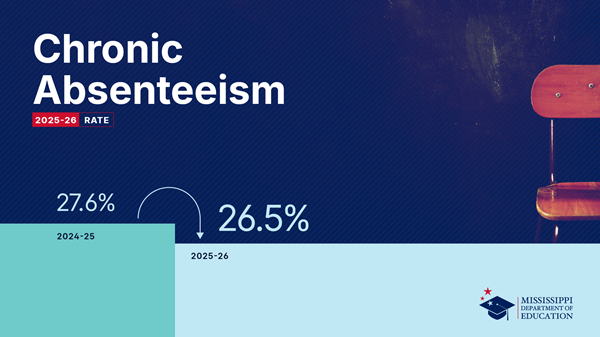
MDE defines a chronically absent student as one who misses 18 total days in a school year, which represents 10 percent of the full academic year.
Associate State Superintendent Dr. Bryan Marshall said that the lower numbers are attributed to more involvement between school faculty and families.
“I think that those districts are very intentional about how they handle student relationships and how they handle student interactions,” Marshall said. “When they have a student who doesn't come to school on a routine basis, I think they're very intentional about reaching out to those families and how they reach out to those families. And I think that's a super important key piece for doing well with attendance.”
Students in high school continue to show the highest number of reported absences across the state. Marshall said that older students often miss class for a variety of reasons. Some of the reasons include college tours, family travel or a lack of engagement among students who drive themselves to school.
“There are some students that they're showing up on those reports because they just don't go to school. And those are the ones that we're trying to find the lead through to find the barriers of why they're not coming to school,” Marshall said.
In the Oxford School District, all seven schools saw a 14.6% chronic absenteeism rate for the year, lower by 5% from the previous school year.
Deputy Superintendent Marni Herrington said each school principal set individual goals and methods to reduce absenteeism. Principals had 45-day increments to test different “action steps” to determine what worked best to get students back in the classroom.
“Our principals took a comprehensive approach, we did have student incentives that varied from school to school, but we also had parent communication plans to ensure that we were checking in with students if they were absent... seeing how we could support, what we could do,” Herrington said.
Herrington added that teaching students the impact of missing school also helps to keep them in the classroom. Counselors worked to show what absences can add up to, and how it can change a student’s future.
“I really think that the track that we've been on in our district, which is really just to be very intentional about absentees and very proactive, I have been helpful,” Herrington said. “I feel like we have taken a proactive approach and we've already seen huge gains in that.”
The Department of Education updated legislation regarding chronic absenteeism in July 2026. The changes aim to reduce absenteeism by notifying parents when children are absent from school and using interventions to reduce missing school days.