Your Page Title

USDA announces plan to reopen ports along U.S.-Mexico border for livestock trade

Email share
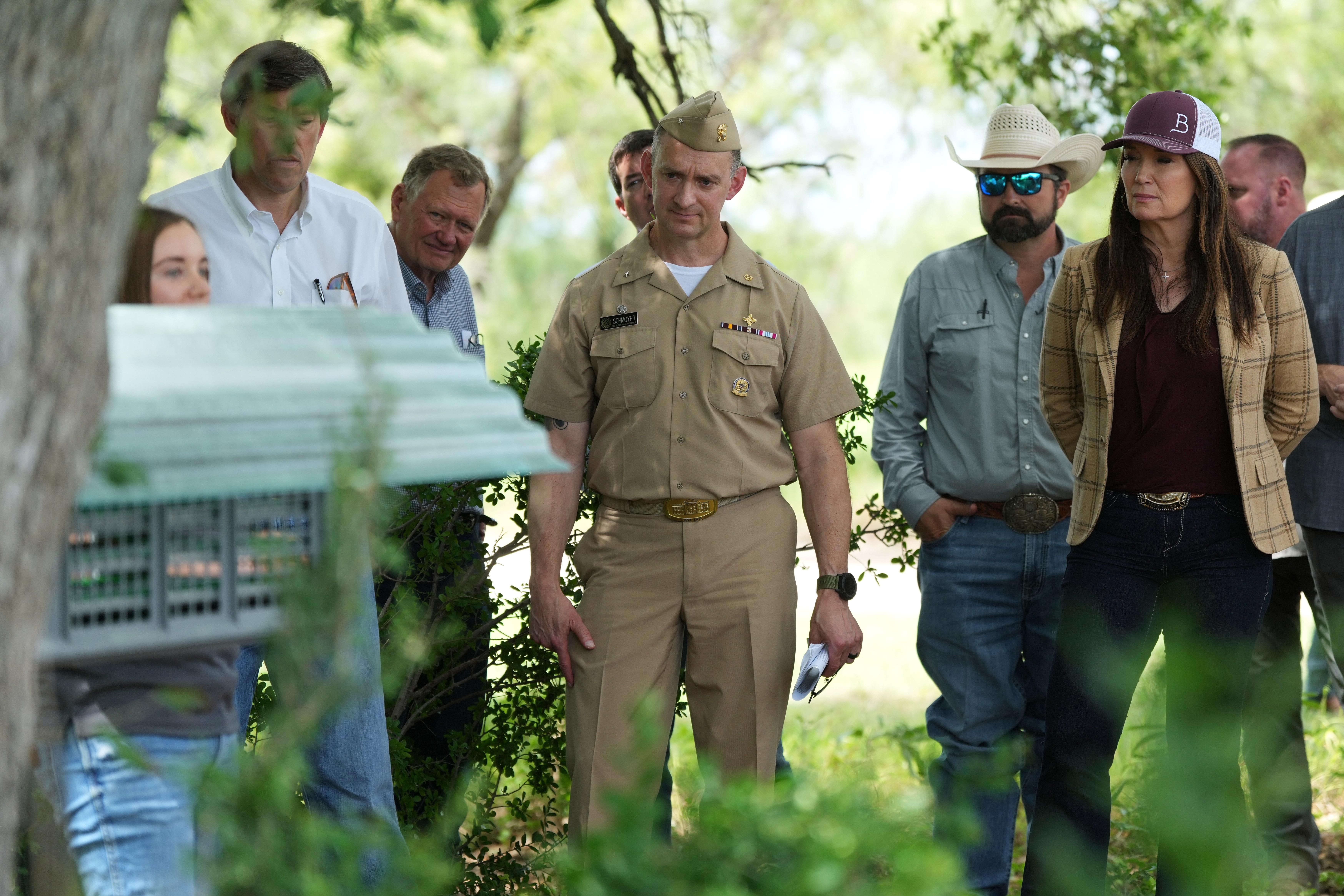
U.S. Agriculture Secretary Brooke Rollins, right, joins other officials, ranchers and media to view a sterile fly dispersal station placed by the U.S. Department of Agriculture to combat the spread of the New World screwworm fly on grounds of a ranch near La Pryor, Texas, Thursday, June 11, 2026.
(AP Photo/Eric Gay)

With closures lingering for over a year now, the U.S. Department of Agriculture announced that it plans on reopening ports in the southwest U.S. for livestock trade. 

Elise Catrion Gregg

USDA to reopen ports for livestock trade

00:0000:00

Those ports were closed in May of 2025 to prevent screwworm infections in the U.S., as cases were ramping up in South and Central America. The screwworm was detected domestically earlier this year, though, after they'd been fully eradicated in the U.S. since the late 1960s

Reopening will start in Douglas, Arizona on August 24, with a plan to reopen other ports in New Mexico in phases based on the success of operations in Arizona. Douglas is roughly 325 miles from the nearest active case. 

"The closure of the Southern ports of entry for the last year has been a tough but necessary action to control the spread of NWS [New World screwworm] in Mexico and protect the American livestock industry," said USDA Secretary of Agriculture Brooke Rollins in a press release. "Thanks to the work across the federal government as well as state, local, and industry partners, it is now safe to reopen the Douglas, Arizona, port in 30 days to resume the hundreds year old movement of cattle."

The plans to reopen ports comes while there are at least nine active cases of screwworm in the U.S., as of July 27.

However, all of those cases — and nearly all detected cases, including those now inactive — have been in Texas. All current port reopenings are planned outside of Texas. In a release, the USDA said that regions in Mexico, Chihuahua and Sonora (which are along Arizona and New Mexico) have "maintained a strong animal health infrastructure program". 

Those regions, in the north of Mexico, are farther from where the USDA says the majority of detected NWS cases have been located in the south. 

Josh Maples, an agricultural economist specializing in livestock marketing and policy at Mississippi State University, said that opening select ports, along with full NWS inspections, should help mitigate risks. 

"They're not coming in in the South Texas area in the initial ports they're come in; it's not gonna be very many cattle," said Maples. "We're just trying to see if we can get this going again to support the feed lots in those areas."

Those feed lots are a key point to current livestock trade across the U.S.-Mexico border. Many of cattle coming across Mexico, said Maples, go to feed lots to specifcally be processed into beef. 

While Mississippi has been at low risk for screwworm infections because of distance, the economics of reopening ports could affect livestock industry in the state. 

"If you're a producer here in Mississippi and you're selling feeder cattle, cattle to go into feedlots eventually, this is potentially some more cattle coming in that your cattle are then competing with," said Maples. 

But, reopening ports in August isn't likely to cause major competition in the short-term because of longer-term domestic supply issues.

"The reason these cattle are coming in is because feed lots primarily or traders in the U.S. are purchasing these cattle," said Maples. "There's a pretty big chunk of the cattle industry, especially in those local areas that are supportive of this, of this reopening because the industries in those areas in particular rely on those cattle and their business models rely on these cattle." 

And, while cattle inventory is up slightly, beef cows that have calved are slightly down from a year ago, a year that Maples said was already low. 

"We're just continuing to see this trend of tighter calf supplies, tighter cattle supplies," said Maples adding that beef demand is still strong, despite some slight pullback on beef demand from earlier this year, driving beef prices up. 

According the Mississippi State University Extension, state livestock production was worth roughly $744 million in 2025 — making it the fourth most-valuable agricultural commodity in Mississippi. 

Responses to the announcement from leaders in the cattle industry have largely been positive, though there have been pushes for earlier reopenings because of the economic effect of closures. 

“While I’m pleased to see this important trade relationship restored, the prolonged closure has already taken a toll on producers, disrupted supply chains, and created uncertainty that could have lasting consequences for the cattle industry," Texas Agriculture Commissioner Sid Miller said in a statement. 

But, some uncertainty could remain around the feasibility of reopening ports, especially with active screwworm cases in the U.S. 

Previous attempts to reopen ports have been announced before NWS was detected domestically. This month's announcement starts with ports included in earlier plans, excluding ones in Texas. 

"We tried to reopen the border before and then those efforts were shut down because of security concerns," said Maples. "Is this one going to stick and then if it does stick, is it going to expand to the other ports?" 

"I think there's still some question marks there about exactly how this plays out."